Why the Derrimut Wrecking Yard is a Goldmine for Mazda Rotary Enthusiasts
For anyone who has owned a Mazda RX-7, RX-8, or RX-3, the hunt for parts is a familiar ritual. These cars are loved for their distinctive rotary engines, but keeping them on the road requires a steady supply of components that are no longer made by the factory. New old stock is drying up, and online auctions often carry inflated prices. That is why a visit to a specialist wrecker in Melbourne, particularly a Derrimut wrecking yard, can change the entire outlook of a restoration project.
I have spent more weekends than I care to count crawling through dismantled cars in search of a clean rotor housing or a set of Enkei wheels that still hold true. The experience has taught me that not all wrecking yards are equal. A general scrapyard will treat a rotary car as scrap metal. A specialist operation treats it as a library of salvageable knowledge. Just Rotaries in Derrimut is one of those rare places where the inventory is curated, not crushed. They focus exclusively on rotary-powered Mazdas, which means every shelf and every dismantled car on the lot has something worth finding.
Why a Specialist Wrecker Matters for Rotary Cars
The Mazda rotary engine is unlike any other. The rotor housing, for instance, is a precision-machined part that wears differently than cylinder walls in a piston engine. A general wrecker might not know the difference between a worn rotor housing and a reusable one. But a specialist who deals with these engines every day can spot the subtle scoring patterns that indicate whether a housing is still serviceable. That kind of judgment is the difference between buying a part that will last another 50,000 kilometres and buying a paperweight.
When I needed a replacement oil pan for a Series 5 RX-7, I spent weeks calling around. Every general wrecker told me they had nothing. A Derrimut wrecking yard like Just Rotaries had three options on the shelf, each from a different model year, and they could tell me which one had the correct drain plug location and which oil pan had been modified for a racing application. That is not the kind of information you get from a parts database. It comes from hands-on experience with dismantled cars.
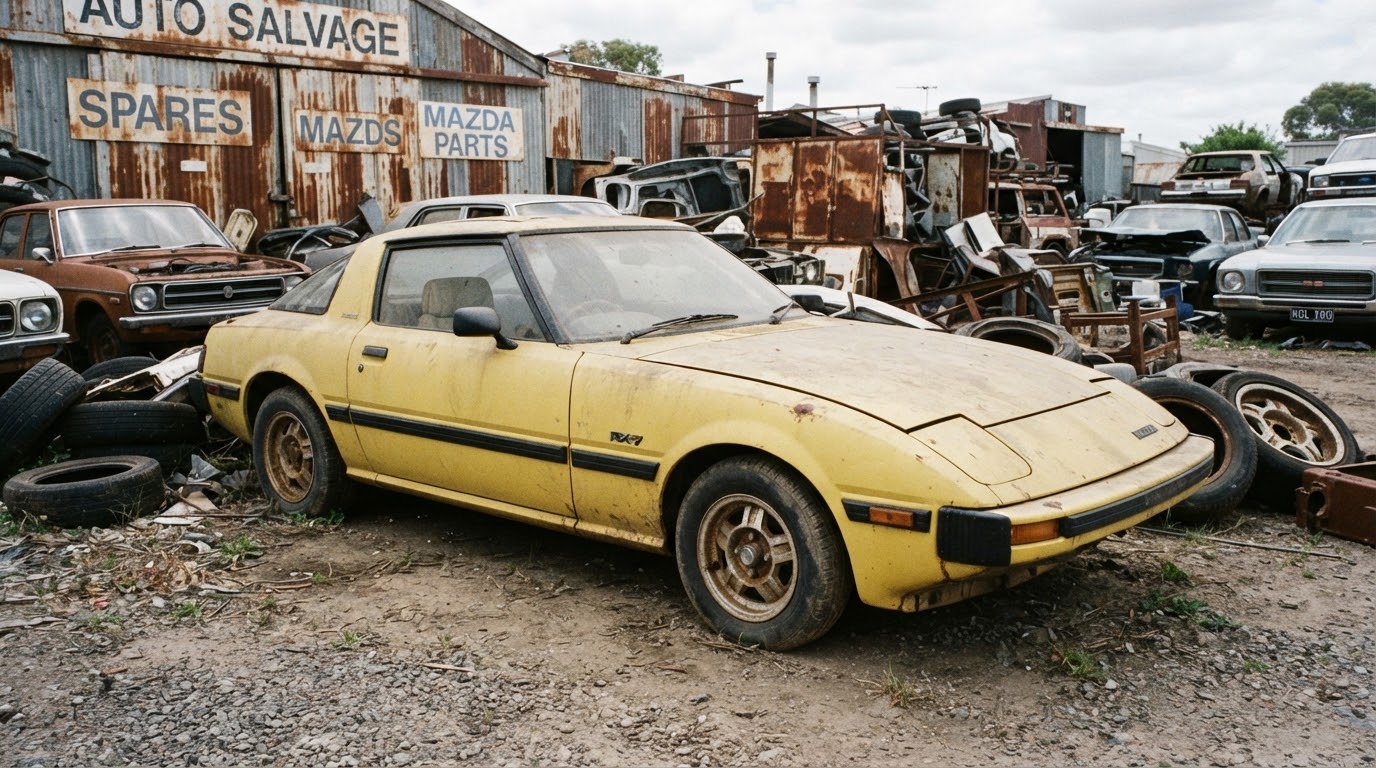
What You Can Expect to Find
A well-stocked rotary wrecker carries far more than just engines. The whole vehicle is a source of parts. Here is a sample of what a serious enthusiast can walk away with:
- Complete transmissions and clutches from RX-7 and RX-8 models, often with verified mileage
- Brakes and suspension components that bolt directly onto older chassis with minimal modification
- Racing Beat aftermarket parts, including manifolds and exhaust components
- Enkei wheels in period-correct sizes for RX-3 and early RX-7 builds
- Rotor housings and internal engine parts that have been inspected and sorted by condition
The key is that these parts come from vehicles that have been properly dismantled, not crushed. That means bolts are not snapped off, brackets are not bent, and the parts are stored in a way that preserves their condition. A used part from a specialist wrecker can often perform as well as a new one, provided it has been correctly assessed.
Rebuilt Engines vs. Used Parts: The Trade Off
One of the more common questions among rotary owners is whether to buy a rebuilt engine or go with a used one from a wrecker. The honest answer depends on your budget, your timeline, and your willingness to do work yourself. A rebuilt engine from a place like Just Rotaries gives you the confidence of fresh seals, new bearings, and a measured rotor housing. But it costs more and may require a wait if they are building to order. A used engine, on the other hand, can be pulled from a dismantled car that same afternoon. The trade off is that you are accepting the wear that the previous owner put on it.
I have run both. My first RX-3 project used a second-hand engine from a Derrimut wrecking yard. It had good compression and clean rotor housings, and it ran for years without issue. My current RX-7 has a rebuilt engine that I put together with parts sourced from the same yard. The rebuilt engine is smoother, but the used one was a fraction of the cost and got me on the road faster. There is no universal right answer. The important thing is to have a source where you can see the parts in person and make your own call.
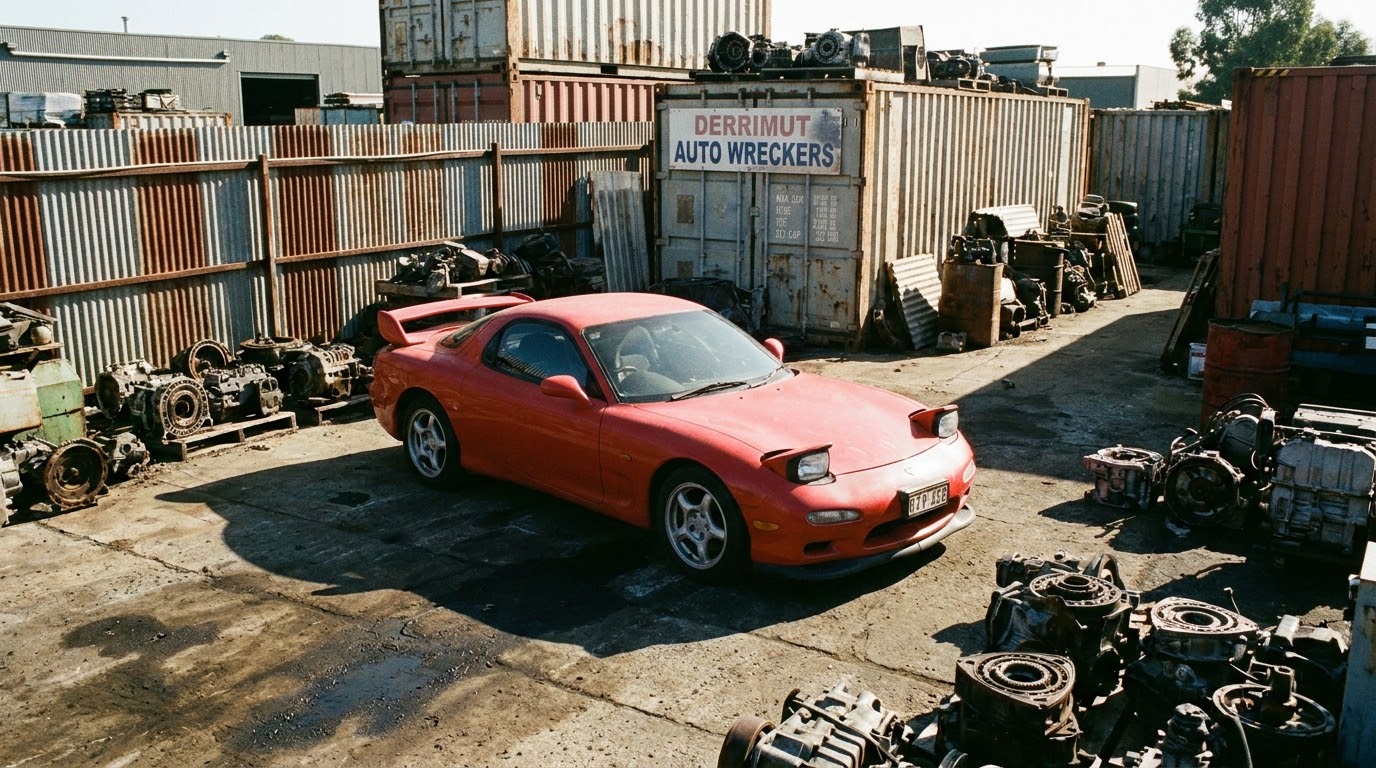
How to Evaluate a Used Rotary Part
If you are standing in a wrecking yard looking at a dismantled car, there are a few things to check before you hand over your money. First, look at the rotor housing. Run your fingernail across the chrome plating. If it catches on a groove, the housing is worn past safe limits. A housing that still feels glassy can be reused. Second, check the condition of the oil pan. If it has been dented or has a cracked drain plug boss, it might leak. Third, spin the rotors by hand if the engine is still assembled. Uneven resistance can indicate a binding apex seal.
These checks are simple, but they require access to the parts and a bit of know-how. That is where the staff at a specialist wrecker earn their keep. They can tell you which engines came from cars that were well maintained and which ones were neglected. They will also know which models share interchangeable parts. For example, many RWD components from a later RX-8 can be adapted to a first-generation RX-7 with minor modifications. That kind of cross-model knowledge saves you from buying the wrong part.
The Melbourne Rotary Community Connection
Melbourne has a strong rotary community. There are regular meetups, track days, and online groups where owners share tips and sell parts. The wrecking yard is often the hub of that scene. When you walk into a Derrimut wrecking yard, you are likely to run into someone who is working on a similar project. I have had conversations in the yard that led to shared shipping on a bulk order of gaskets and tips on which aftermarket clutch handles the torque of a turbocharged rotary.
Just Rotaries, in particular, has become a gathering point for people who are serious about keeping these cars alive. They stock Racing Beat parts, which is the go-to aftermarket brand for rotary performance, and they carry Enkei wheels that are hard to find anywhere else. If you are restoring a car to original spec or building a custom racer, the yard is a resource that no online store can replace.
The Bottom Line
If you own a rotary Mazda, or if you are thinking about buying one, make friends with a good wrecker. The days of finding these cars in junkyards are fading. The cars that are being dismantled now are the last source of many parts. A Derrimut wrecking yard that specialises in rotaries is not just a place to buy used parts. It is the most practical way to keep a rare engine on the road without waiting months for overseas shipments or paying inflated prices for New Old Stock. Whether you need a transmission, a set of brakes, a suspension strut, or a complete rotor housing, the parts are out there. You just have to know where to look.